Marshall McLuhan's Mosaic: Probing the Literary Origins of Media Studies


Probing the Literary Origins of Media Studies   -   by Elena Lamberti

One hundred years after Marshall McLuhan’s birth, Elena Lamberti explores a fundamental, yet neglected aspect of his work: the solid humanistic roots of his original ‘mosaic’ form of writing. In this investigation of how his famous communication theories were influenced by literature and the arts, Lamberti proposes a new approach to McLuhan’s thought.Reconnecting McLuhan with his literary past, Marshall McLuhan’s Mosaic is a demonstration of one of his greatest ideas: that literature not only matters, but can help us understand the hidden patterns that rule our environment.

Elena Lamberti is a research professor in the Department of Foreign Languages and Literature at the University of Bologna.

‘Marshall McLuhan’s Mosaic is the truly refreshing and fresh engagement with McLuhan’s writing that the digital age has been waiting for.’ – Linda Hutcheon, University of Toronto

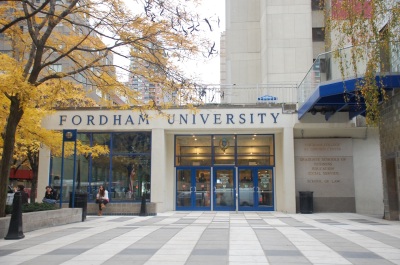
‘Elena Lamberti’s Marshall McLuhan’s Mosaic stands as a milestone in literary theory, filling in a major gap in the discipline and in the process making an essential contribution to McLuhan studies and the field of media ecology. ’ – Lance Strate, Fordham University; author of “On the Binding Biases of Time and Echoes and Reflections”; and co-editor of “The Legacy of McLuhan”

‘Marshall McLuhan’s Mosaic is a breathtakingly wide-ranging study, taking in the history of knowledge, rhetoric, and media from the middle ages to the present.’ – Max Saunders, King’s College London

http://www.canadausa.net/?p=1083

 Dr, Elena Lamberti

ELENA LAMBERTI teaches American and Canadian Literature at the University of Bologna. Her areas of research include: Anglo- American Modernism, literature and technology, Cultural Memory, war literature. She has published several essays on English and Anglo-American Modernism (Ford, Joyce, Pound, Hemingway), as well as Anglo-Canadian culture of the late 20th Century (Coupland, Cronenberg, McLuhan). She served in the European Thematic Network ‘Acume: Cultural memory and European Identity’, (2002-2005), and was a member of the European Think Tank on “The Images of Europe”, sponsored by the European Commission Educational DG (2005-2007). Among her books are:Marshall McLuhan: tra letteratura, arte e media (Bruno Mondadori, 2000); Prove di un senso critico: saggi di Ford Madox Ford (with V. Fortunati, Alinea, 2001); Interpreting/Translating European Modernism. A Comparative Approach(Compositori, 2001). She is currently completing the volume Marshall Mcluhan’s Critical Writing. Probing the Literary Origins of Media Studies (University of Toronto Press. Forthcoming, 2011).

Buy from Amazon.ca (Canada) http://tinyurl.com/7c8t9u3

Amazon.com (USA) http://tinyurl.com/72dxazg


McLuhan had a keen interest in documentary and even made a documentary himself “The Burning Would” (1970).

In 1970, our prophet of Information made a 14-minute film entitled “The Burning Would”. The film was made in an attempt to stop the building of the Spadina Expressway. No digitized version of the film exists.
What interests me most about this film is what McLuhan wrote about it. In a letter to McGill professor Hugo McPherson, McLuhan said: “I managed to contrive a new kind of sound effect for the visual images, which proved quite effective.” (1970) http://youtu.be/GDzkjL7r5zg /p>

***

Expanding on that last point during the late 1960s debate on the Spadina Expressway, McLuhan found parallels in the urban environment with the way in which television had destroyed movies. In a 1970s interview, he told Take One magazine [PDF]: “You put an outer ring of suburb around an old city and this automatically destroys the inner city, that’s all. And if you put a new medium around an old one it automatically destroys the old one. In the act of using the old one it destroys it. But in destroying it, it turns it into an art form.”

Indeed, McLuhan examined the Spadina Expressway issue through the lens of his media theories. “Toronto will commit suicide if it plunges the Spadina Expressway into its heart,” he was quoted as saying in one publication. “[O]ur planners are 19th century men with a naive faith in an obsolete technology. In an age of software Metro planners treat people like hardware—they haven’t the faintest interest in the values of neighborhoods or community. Their failure to learn from the mistakes of American cities will be ours too.”
McLuhan became actively involved in the campaign against the expressway. Along with Jane Jacobs and other Torontonians of all political stripes including students, business owners, and ratepayer groups, McLuhan was a member of the Stop Spadina, Save Our City Co-ordinating Committee.

McLuhan wrote to Premier Bill Davis about the issue on April 26, 1971. The theorist started by complimenting Davis as a forward-thinking man of the 1970s who recognized that “we live in an information environment” but are under threat by those “still locked into the old hardware environment of the nineteenth century.” Then, the letter continued:

Instead of catching up by matching up with the nineteenth century of American cities, Canada has a unique opportunity to make cities for the seventies. Making, not matching, is an Ontario possibility lost to the U.S.A. by old hardware rivalry.
The Spadina Expressway is an old hardware American dream of now dead cities and blighted communities. As a man of the seventies you know we need not match the American disasters. We can make our own way. Your vision of the seventies cannot survive a cement kimono for Toronto.

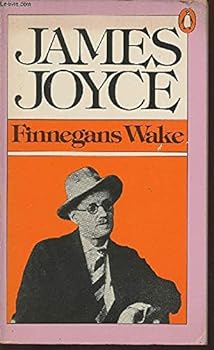
McLuhan also collaborated with Jane Jacobs on a short film, A Burning Would, for the SSSOCCC in 1970. The title derived from a line in James Joyce’s Finnegan’s Wake: “A burning would has come to dance inane.”

The film was McLuhan’s idea, and he intended to be “the final word on the nature of film or stop the Spadina Expressway dead in its tracks.” He enthusiastically approached Jacobs to co-write the script. In his office, they energetically discussed the issues surrounding the Spadina Expressway—flitting from idea to idea, as was McLuhan’s wont—while a secretary took down all they said. At the conversation’s conclusion, McLuhan turned to Jacobs and pronounced the script complete: “Well, that’s it. We’ve got the script.”
When she finally received the secretary’s typescript, Jacobs was aghast. “I started looking through it, and it was even more garbled and unreadable than I expected,” she recalled in an essay she contributed to Sanderson and Macdonald’s anthology. “The thing jumped around, without beginning or end. This did not bother Marshall but it did bother me. I thought we needed a thread.” Nevertheless, they pressed ahead with filming under the guidance of local filmmaker David MacKay (although other sources cite Christopher Chapman as the director). MacKay used the script as the basis for filming questions and answers with McLuhan and Jacobs.
McLuhan told Take One that, after filming, their role was rather limited. He said: “And then we make various suggestions to the makers about footage here and there and E-fects above all—the effects we want. We’ll leave the footage very largely to him once he knows the kind of E-fect we want. He’s got masses of footage, doesn’t have to do much shooting for us.”
Although she said it “bore no relationship at all to [the] original script,” Jacobs was impressed with the finished product when the 12-and-a-half-minute film premiered before a packed audience at Convocation Hall on October 15, 1970. “There was a shape to it. It had music. It did have a thread and raised a lot of important issues,” Jacobs felt; then she added, “It’s a mystery to me that something tangible, coherent and constructive could come out of that mess.”
In the Globe and Mail the following day, film critic Kaspar Dzeguze called it “a short film meant to be crammed down the maw of Spadina Expressway supporters, the message was a subjunctive—wishful and hopeful, though hardly tense—review of the reasons advanced for abandoning the expensive, self-contradictory project.” In terms of the visual content, Dzeguze reported that it was “a collage of scenes taken in the parks which the road would destroy, intercut with shots of clogged highways, homes being destroyed and the wasteland of auto wreckers’ lots where engines, roofs, tires and doors form piles of automotive offal.” The Star‘s reviewer was decidedly less impressed, calling its theme and presentation obvious.
The film would be shown all across North America, wherever there were contemporary campaigns against expressway construction. Although the film is not available online, copies are available at the York University Archives and in the library at St. Michael’s College.
In Palmer’s estimation, by the beginning of the 1970s, when McLuhan was taking part in these urban interventions, “McLuhan’s celebrity was waning.” His insights were heeded by the powers that be with increasing rarity. “The times were partly to blame,” Marchand asserts. “In the sixties the world changed suddenly and everyone wanted to know why; in the seventies change continued, but in much grimmer and duller fashion, and everyone wanted only to cope.” McLuhan continued to give seminars to dwindling numbers of students and write books that were less well-received than before. He left teaching in the fall of 1979 after suffering a severe stroke, and died the following year.
Other sources consulted: T.W. Cooper, “The Unknown McLuhan,” in Sanderson and Macdonald, eds.,Marshall McLuhan: The Man and His Message (Fulcrum, 1989); Globe and Mail (October 20, 1970); Marie Molinaro, Corrine McLuhan, and William Toye, eds., The Letters of Marshall McLuhan(Oxford University Press, 1987); Toronto Star (October 14, 1970); Toronto Star (May 7, 2010).

Spadina Expressway


Artist Iain Baxter& at his lakefront home in Windsor, Ont., Tuesday, Feb. 21, 2012.
Artist Iain Baxter& at his lakefront home in Windsor, Ontario, Tuesday, Feb. 12, 2012 Photograph by Nick Brancaccio, The Windsor Star

WINDSOR, Ont. — A major retrospective of the work of Windsor artist Iain Baxter& at Toronto’s Art Gallery of Ontario next month could change the way people think about art.

“The show is actually an experiment to create an interface with the general public,” said the 75-year-old Baxter&, whose career has been marked by challenging the conventional wisdom about art.

The exhibit titled Iain Baxter&: Works, 1958-2011, opens March 3 and runs through Aug. 12. Consisting of more than 100 pieces and 200 photographs, it is the AGO’s first comprehensive survey of the influential artist in almost three decades.

Adam Lauder, a York University expert in digital research, said a retrospective of Baxter&’s career is long overdue.

“It’s great to see Iain Baxter& recognized for the tremendous contribution he has made to Canadian culture,” said Lauder, who has prepared a 200-page online monograph ( archives.library.yorku.ca/iain_baxterand_raisonne ) in conjunction with the exhibit.

Baxter&, who is professor emeritus of the University of Windsor’s school of visual arts, was born in England and emigrated as a child to Canada in 1937.

His undergraduate studies in zoology later influenced his thinking about art as a way of understanding the links between the natural and the man-made worlds. Armed with a master’s degree in education from the University of Idaho, Baxter& studied art and esthetics in Japan, then later completed a second masters in fine arts at Washington State University.

While living in Western Canada, Baxter& and his first wife, Ingrid, developed a keen interest in conceptual art which employed photography, site-specific installations and performance art. They founded the highly influential movement N.E. Thing Co., in 1966 which combined art with consumer culture.

Much of his thinking about art grew out of his relationship with media guru, and fellow Canadian, Marshall McLuhan. Baxter&, in fact, has sometimes been called “the McLuhan of visual art.”

“Back in the 1960s,” he said, “McLuhanism is what I got turned onto, and (it affected) my whole attitude about looking at information and the arts.”

Named to the Order of Canada in 2003, Baxter& won the Governor General’s Award for visual and media arts in 2004, and the Canada Council for the Arts’ prestigious Molson Prize in 2005, joining the likes of Glenn Gould and Margaret Atwood.

Also in 2005, he began adding the ampersand — & — to his last name as an indication that his art and the public’s perception of it are in a constant state of flux. Recently, Baxter& trademarked the ampersand in Canada. Read more at http://tinyurl.com/73hz7cs

Monograph on Iain Baxter available here: http://archives.library.yorku.ca/iain_baxterand_raisonne/

Exterior view from the northeast of the redesigned Art Gallery of Ontario
 Art Gallery of Ontario

 Dr. Paolo Granata

Paolo Granata is professor of Digital Catalogues for Cultural Heritage at the Post-Graduate Specialisation School for Art and Historic Heritage at the University of Bologna. Since 2008 he has also taught Multimedia for Cultural Heritage at the Academy of Fine Arts in Bologna. In 2001 he authored the book Arte in Rete, the first rational guide on the art resources on the web ever published in Italy. In 2003 he founded the MultiLab educational laboratories on Humanistic Computing for the University of Bologna (Faculty of Humanities). Since 2005 he has worked for the research programme on Italian video art Videoart Yearbook. L’annuario della videoarte italiana, promoted by the Department of Visual Arts of the University of Bologna. His latest book, Arte, estetica e nuovi media, (2009), is a summary of his work for an interdisciplinary approach to new media. He was recently a Visiting Scholar and McLuhan Centenary Fellow at the McLuhan Program, Faculty of Information, University of Toronto.


Brennan Hall, St Michael's College, University of Toronto

St. Mike’s, University of Toronto

The Eccentric as a Cultural Hero

James Paupst MD, Senior Fellow, Massey College

It’s easy to describe a phenomenon, but difficult to explain it.

Eccentricity, with its antipodal intuitions and arcane connections, is phenomenal; for this reason I decided to become an auto-eccentric.

I did, but it took and became my métier.

I was beguiled by those who displayed the eccentricity of genius: Marshall McLuhan, Edward de Bono, Haruki Murakami , Brian Stock and Stanley Holmes.

Genius is immediate, talent takes time.

Without genius I could only aspire to talent: In 1977 I sold my XJ 12 Jaguar bought a two door 1977 Chev Caprice Classic, $6800 brand-new which I continue to drive.

My earlier electronic address was recluseathome@aol.com.

My collection of Harry Rosen suits: Polish blue, French blue, grey and houndstooth were of the early 1980s

A friend of mine characterized my participation in social events as Alfred Hitchcock appearances.

In the cloak of eccentricity, I was able to evade social occasions so that I could spend more time reading, my only unpunishable vice.

In July 2011 I was invited to a garden party for investment banker DK Johnson, to celebrate his 75th birthday with the Canadian tenors in the background; my written response was that I would be unable to attend because I was dining alone on July 18.

The act of thinking for me has always been conceptual, rather than visual; out of this I developed a unique system of selecting triactor winners: In a field of 12 horses I would create a narrative using the horses names and soon discovered that this was so successful that I opened an RBC account dedicated to wagering.

My intuition has always been strong, a Celtic ancestral gift: Intuition is knowing, without knowing why, a sacred act while the rational mind is the servant.

I read English at St. Michael’s College and later drew upon this training in the 70s to write a book entitled The Pill, published by Clarke Irwin.

As a physician I was bombarded by questions from young women who had begun taking oral contraceptives; they wanted to know how the pill would affect their mood, their future fertility, their weight and libido.

No reference book existed: I wrote the first book on the subject.

For this same reason, later in the 70s, I wrote the first book on the phenomenon of sleep, entitled The Sleep Book, published by Macmillan in Canada, and later released in German, Spanish and French.

No work existed, in a single book, on sleep deprivation, difficulty falling asleep, snoring and sleep apnea, sleeping medication, chronic insomnia, bedwetting, night terrors, narcolepsy, sleep walking, rapid eye movement sleep and what sleep really is: The Sleep Book provided many of the answers.

In the 80s executive stress became a dominant cultural theme; this led me to write Breakthrough or Breakdown. I was a village doctor, however the village just happened to be Bay Street, the country’s financial centre: In my medical practice I was dealing with the executive class.

In 1957 I was in residence at St. Michael’s [College] in a house that we called 2/96, a house with two entrances: 2 Elmsley Place or 96 St. Joseph Street.

McLuhan’s office faced St. Joseph’s Street, right around the corner from my room, and I couldn’t resist visiting him; we considered him to be our de facto housemaster.

I was in his second year English class, the Joycean lectures; his office door was often open and there he sat, angular, beneath his totemic Cambridge oar, a trophy from the Cambridge triumph over Oxford: McLuhan was a member of the victorious racing shell.

In one of my visits I asked the question about Joyce’s declamation:

“Ineluctable modality of all things visible is my visionary aim.” Why ineluctable?

His response: “You may find the answer in Finnegan’s Wake.”

At this time he was introducing his theory of communication to the university community; he would often meet with anthropologist Edmund Carpenter who collaborated with him on the Exploration series; sometimes they met at the King Cole room, the KCR, in the Park Plaza Hotel, a favourite watering hole for professors and students.

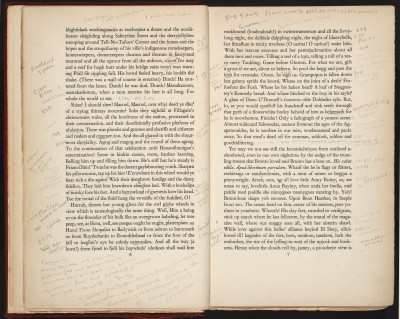
On one Friday afternoon, McLuhan and Carpenter were sitting at a table studying Finnegan’s Wake when a professor tottered over to their table, read a couple of paragraphs and blurted out:

“God, I must be drunk; I really have to go home.”

In 1958 I was accepted as a student by the faculty of medicine at the University of Toronto; I went in to tell Dr. McLuhan my news and he kindly offered to later collaborate with me on a medical topic.

I didn’t learn until Philip Marchand’s McLuhan biography was published that McLuhan would often use this offer of collaboration to dispatch students: We couldn’t wait to rush out and tell our classmates about this proposal.

An intoxicating irony arose in 1961 when McLuhan contributed an article, Stress, Media and Medicine to the Adversary.

There was no journal of arts and letters with an editorial content that targeted the faculty of medicine; in 1960 I decided to publish the journal, Adversary, as a way of contributing to my tuition and to my classmates’ literacy.

In the first issue I had contracted with Brian Stock, a premedical student, to contribute an essay on Hippocrates; he was to be paid $25, but after paying for the printer and the subscriber mailing, I was left with no money.

Later that year he won a Harvard scholarship in literature and went on to doctoral studies at Cambridge.

His essay was coruscating in its brilliance: he presented Hippocrates as a humanist.

This was a portent of what was to come (I wish that I could have claimed prescience): Professor Stock in his writing displayed a prodigious intellect; he has been able to cross several disciplines leading him to pose the essential question: “Why do we read?”

His seminal works include The Implications of Literacy, Augustine the Reader, and After Augustine.

Fifty years later, in 2010, I delivered a cheque to him for $25; this has been framed (with not quite the exultation that he experienced after receiving the 2009 Feltrinelli Prize and the $350,000 US that accompanied it).

Not only did Dr. McLuhan contribute an essay, on my behalf he wrote to Wyndham Lewis’s wife requesting permission for his short story, The Rebellious Patient, to be published in the 1961 issue.

McLuhan had befriended Lewis and arranged for him to have a university teaching position, in Canada, during World War II.

He requested that I send her a money order for 15 (use the sign for L British currency).

Of Wyndham Lewis, T.S. Eliot wrote:

“The fact that Mr. Wyndham Lewis is known as a draughtsman and a painter is not the least consequence to his standing as a prose writer. To treat his writing as an outlet for his super abundant vitality, or a means on his part of satisfying intellectual passions and keeping his art healthy, cannot lead to accurate criticism… he must be allowed the hypothesis of a dual personality.”

The McLuhan essay and the Lewis short story imparted cachet to the second issue.

Edward de Bono, physician and psychologist, who went on to develop a wide range of thinking methods emphasizing thinking as a deliberate act rather than a reactive one, derived part of his genius by an eccentric act.

When he was an undergraduate and Rhodes scholar at Oxford, he missed curfew and was forced to enter his college surreptitiously. An old hand at this told him that the problem was surmountable. He first had to climb a set of railings, then a wall, make a short sprint, and climb a second wall.

De Bono, fully carbonated after a party in London, easily ascended the first wall, paused and then dropped to the ground. He did the mandarin shuffle (Oxonians don’t stagger), looped around and confronted what he thought was the second wall. He scaled it, slid to the ground and found himself once again outside his college.

After invoking the deity, he set forth purposefully and deliberately. He made it to the top of the second wall, and found that he was sitting astride the gate, which would give him final access to the college’s rooms.

Sitting there, mulling over his experience, he remembered never seeing anyone lock the gate. The reward for his intact memory appeared in an instant: The gate, buffeted by the wind, swung open.

Perhaps it was this trace memory that broke his subservience-others had told him that the gate was always locked-to vertical thought, and projected him into his research and writing on the use of lateral thinking and the mechanisms of the mind.

In an earlier paper on the phenomenon of memory, the only cognitive function that works backwards, I wrote about Stanley Holmes but did not expand on the eccentricity of his genius.

This led to significant mining discoveries in Spain and Italy. He told me this story: “After taking my doctorate in economic geology at Cornell, I worked for several years in Death Valley, California, then in Blind River and the Elliot Lake District in Ontario. It was at this time I came to know Steven Roman. He was the entrepreneurial genius behind Denison Mines. He became my friend, my protegé and my boss. He sent me to explore the countries around the Mediterranean basin as a prospector for uranium-bearing ore.”

Holmes’s exploration carried him across the lands that had once made up the Roman Empire: “I was constantly being told by my hosts, when we came upon old mining properties, that these were the ancient mines of the Romans and would have no interest for me.”

He began to dream of Phoenicians, Carthaginians and Etruscans. However during wakefulness, his dreams and the memory trace that they symbolized continued to elude him. The memory remained in the periphery of his consciousness.

It finally burst through: “When I was a student at McGill University, one of the books that struck me most was Gibbon’s The Decline and Fall of the Roman Empire. It taught me that the infrastructure of the Roman Empire was based on their ability to use metal. The ancient Romans used the same mining techniques that we use today, except that because of mechanization, we can go deeper.

“It stood to reason that wherever the Romans staged their military campaigns, and established colonies, there might be major mineral belts and worthwhile metal deposits.”

He then began to “prospect” the libraries of the universities of London, Madrid, Lisbon, Paris and Rome. He plotted the sites of long forgotten mines and organized all the information he collected.

Holmes believed that his memory of Gibbon was unlocked somewhere within the interstices of his memory dream. And it was this wisp of memory, this arcane connection, that ultimately was pounded into layers of gold, tin, copper and silver-effectively rejuvenating mining for metal in Europe with the discovery of the Rubiales mine. This property was an ancient Roman mine, in the north of Spain, in the province of Galacia.

Holmes went on to say: “In all of life the odds are 6 to 5 against, but not in this case.”

Now for the audible click: The eccentric has been identified often as idiosyncratic, a misfit, someone who deviates from what society deems to be the centre.

The true eccentric is a cultural hero because he or she, by intellect and primal curiosity, has established a different centre.

 St. Basil’s Church


by    -   February 17, 2012

The greatest living graphic designer brings to life the greatest dead media theorist.

“McLuhan searches for semiotics beneath semiotics, levels of meaning beyond the messenger’s intent or the recipient’s awareness,” Philip B. Meggs once wrote. Though his most famous concept-catchphrases remain “the global village”and “the medium is the message”,Marshall McLuhan originated hundreds of other “probes” — cryptic aphorisms designed to push the reader or recipient into completing a thought process.

In The Book of ProbesEric McLuhan, Marshall’s son, partners with media theorist William Kuhns and David Carson, considered by some the most influential graphic designer working today, to bring to life McLuhan’s sharpest probes culled from his books, speeches, classes, and various writings published between 1945 and 1980. Since McLuhan was as much a master of textual provocation as he was a co-conspirer in a new visual vernacular for the Information Age, Carson’s bold, thoughtful visual metaphors — all 400 gripping pages of them — present a powerful lens on McLuhan’s legacy that is at once completely fresh and completely befitting.

Terrance Gordon, author of the authorized biography Marshall Mcluhan: Escape Into Understanding, writes of the McLuhan-Carson pairing in one of the featured essays:

McLuhan’s words are about words, and Carson responds with a map about maps.

[…] Unlike the spines of a cactus in their tidy rows, McLuhan’s prickly probes zigzag across a vast thoughtscape. Following him, keeping up with him, we have no time to rest or recognize a new location before he beckons us to move on. David Carson comes to our rescue. As translation into the local idiom and bearings for our current whereabouts, his art work roots us for a moment, even as McLuhan pulls us ahead. But Carson does not deliver comforting postcard views; his visual mosaics can leave us just as breathless as the punches of McLuhan’s prose. Snap and shoot, but no snapshots from either artist or writer.

The McLuhan-Carson partnership works constantly to turn symbiosis into synergy.”

The probes themselves, wrapped in Carson’s equally provocative and thought-provoking visual micro-narratives, reveal not one McLuhan but many — the social psychologist (“The content of new situations, both private and corporate, is typically the preceding situation.”), the linguist (“Languages are environments to which the child relates synesthetically.”), the artist (“Color is not so much a visual as a tactile medium.”), the scholar (“The content of new situations, both private and corporate, is typically the preceding situation.”), and a near-infinite number more

(Cue in Paola Antonelli on humanized technology.)

Kuhns points to four recurring keywords that define McLuhan’s probes:conditions (the idea that understanding hinges on the ability to remove oneself from a situation just enough to see the connections between various elements at play), space (the question of the human family’s confines and whether escape is even possible), resonant (the inescapability of our sound environment, which is a prison if we let it but an escape mechanism if we know what to listen for), andtribal drums (the concept of the resonant utterance, inspired by James Joyce’s vision for a western world retribalized by electric technology).

Other critical terms and themes also recur throughout McLuhan’s thinking and writing — the relationship between perception and conception (“Effects are perceived, whereas causes are conceived”), the interplay of figure and ground (“Ground cannot be dealt with conceptually or abstractly — it is ceaselessly changing, dynamic, discontinuous, and heterogeneous, a mosaic of intervals and contours”), semiotics and language (“The right word is not the one that names the thing but the word that gives the effect of the thing”).

Read & see more pictures at Brainpickings: http://tinyurl.com/7x6n9mp


My colleague Norm Friesen at Thompson Rivers University in British Columbia has posted the following on his website (link below):

In completing a research project looking into McLuhan, media theory and education, I’ve been reading about an early experiment on “certain media biases” and the pedagogical form of the lecture. Download a .pdf of the initial report, originally published in 1954 in Explorations. The New York Times (above) reported on it as well. Marchand’s McLuhan biography, provides a brief excellent overview:

One of the more interesting experiments the seminar group conducted was an attempt, orchestrated by Carpenter, to demonstrate that different media of communication did indeed have an effect quite apart from the content of information they conveyed. In the spring of 1954 more than one hundred students were divided into four groups. At the local studios of the Canadian Broadcasting Corporation, one group watched a lecture delivered on television, a second attended the same lecture delivered in a television studio, a third listened to it over the radio, and a fourth read it in printed form. All groups then took an exam to test their comprehension and retention of the contents of the lecture. As Carpenter later wrote in Explorations, “About twenty of us in the seminar placed bets on the outcome”.

Academics all, we each seriously thought print would win and merely selected other media as sporting bet.” It was the group watching the lecture on television that scored highest in the test, however. The print group scored lower than even the radio listeners.   http://learningspaces.org/n/blog/1 

You can download a pdf of the Ted Carpenter article, “Certain Media Biases” from Explorations by clicking on: http://learningspaces.org/n/files/certain_media_biases_OCR.pdf 

 Ted Carpenter


A related aspect of this discussion is Nicholas Carr’s provocative question – is the Internet making us stupid? See http://tinyurl.com/ykchfpj .

This short piece is excerpted from Evan Leatherwood’s essay, the whole of which can be read on his blog: http://tinyurl.com/7qjydbf .

***

Every form of communication invisibly lends its biases to the civilization that employs it.

Five centuries of print have given the world cities, industry, specialization, the middle class, mass literacy, continuous technological and social progress, and widespread democracy.

What kind of civilization can we expect from instantaneous electronic communication?

Marshall McLuhan (credit: Louis Forsedale)

Since McLuhan’s time, we have come to a partial understanding of television’s effects on society.  The Internet’s effects are even more dimly understood, yet the accelerated pace of change in the world demands that we understand them as quickly as possible.  The health of the political discourse is one issue at stake, but the health of our intellectual culture and even our minds themselves may also be at stake.

When Marshall McLuhan first proposed the idea that the dominant medium of communication shapes a society more than the content of its communications, he employed metaphors that foreshadowed neuroscience.  McLuhan said that the habit of reading print on the page promoted the visual sense to a place of unnatural prominence, upsetting its natural equality with the four other senses.  He also said that instantaneous electronic communication activated patterns of thought similar to an “oral” or “tribal” organization of knowledge.

The conclusions of neuroscientists currently studying the effects of computers on the brain are even more outlandish than McLuhan’s metaphors.  The concept of neuroplasticity argues that our brains at any stage of life are capable of being rewired by repeated activity.  The rewiring can be so fundamental that types of repetitive brain exercise are prescribed as treatment for diseases like schizophrenia and severe brain damage.  As we use the Web more and more, say some neuroscientists, we are literally reprogramming our brains to think in new ways.  And the new ways of thinking displace older ones.  As we learn to multitask, for example, we actually lose the ability to be silent and concentrate deeply on one thing at a time (Carr, 2010).  Not only do important political decisions require deep concentration, but so too does the formation of meaningful personal relationships.

If there is a chance that even some of these ideas prove to be true, then more than just our political discourse is at stake when we ask how new media are affecting society.  We cannot isolate the effects of media to a single realm, like politics or education.  Instead, we have to ask the broader question: “How is media reshaping our consciousness?”

Carr, Nicholas.  The Shallows: What the Internet is Doing to Our Brains. (New York: W. W. Norton & Company, 2010).

About Evan Leatherwood: http://evanleatherwood.wordpress.com/about/ 


Canadian author and media analyst Marshall McLuhan is known throughout the world for his innovative and sometimes controversial theories and ideas. In his lifetime, McLuhan published dozens of books, journals and papers on media, communication theories and popular culture.

Now, 40 years after it was taken, Kingston-based photojournalist Bob Fleming will debut “Wiring Humanity: Performing Arts, Education and Marshall McLuhan’s Media Think,” a videotaped interview with McLuhan from 1972.

The premiere of the video will take place on Tuesday at Dunning Hall on the campus of Queen’s University. The interview will be shown form 6:30 to 7:30 p.m. and will be followed by a discussion by faculty from the university’s Department of Languages, Literatures and Cultures.

Dunning Hall is at the corner of Union Street and University Avenue.    http://tinyurl.com/7swsb99

Comment: It is hoped that Mr. Fleming will share this interview video with the rest of the world by uploading it to YouTube……..AlexK

 Kingston


A North American Classroom in the 1950s

by Tom Paterson – lifelong educator, Prince George, BC

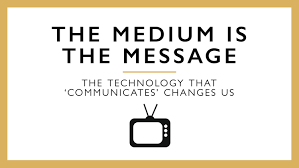
Nearly fifty years ago, Marshall McLuhan published Understanding Media: The Extensions of Man (1964) in which he introduced the concept that the medium is the message.  He described how a change in the medium of the delivery of information, has a transformative effect on its society.  Historically, going from oral to written delivery resulted in changing how information was gathered shared and passed on.  In McLuhan’s time, TV was transforming the transmission on information and the western world.

“ …the medium is the message can, perhaps be clarified by point out that any technology gradually creates a totally new human environment.  Environments are not passive wrappings but active processes… By Plato’s time the written word has created a new environment that had begun to detribalize man.  Previously the Greeks had grown up by benefit of the process of the tribal encyclopedia.  They had memorized the poets.  The poets provided specific operational wisdom for all the contingencies of life – Ann Landers in verse.  With the advent of individual detribalized man, a new education was needed.  Plato devised such a new program for literate men.  It was based on the Ideas.  With the phonetic alphabet, classified wisdom took over from the operational wisdom of Homer and Hesiod and the tribal encyclopedia.  Education by classified data has been the Western program ever since.”

McLuhan correctly predicted the way that TV and video enveloped our western society, but it didn’t substantially change the way that education was done.  TV and video and other audiovisual media were definitely incorporated into educational practice, but it didn’t fundamentally transform it.  Perhaps it was because who it was that had their hands on the remote.  It remained in the hands of the teachers to when and where it was used.

As we look forward to innovations in education we are now in the midst of determining how another technology will impact educational practice; ICT’s – Information and communication technologies.  Personal access to ICT’s by most students which eventually will allow personal choice of programming and self-directed learning may finally bring about the completion of McLuhan’s predictions.

“Now, however, in the electronic age, data classification yields to pattern recognition, the key phrase at IBM.  When data move instantly, classification is too fragmentary.  In order to cope with data at electric speed in typical situations, of “information overload” men resort to the study of configurations, like the sailor in Edgar Allan Poe’s Maelstrom.  The drop-out situation in our schools at present has only begun to develop.  The young student today grows up in an electrically configured world.  It is a world not of wheels but of circuits, not of fragments but of integral patterns.  The student today lives mythically and in-depth.  At school, however, he encounters a situation organized by means of classified information.  The subjects are unrelated.  They are visually conceived in terms of a blueprint.  The student can find no possible means of involvement for himself, nor can he discover how the educational scene relates to the “mythic” world of electronically processed data and experience that he takes for granted.  As one IBM executive puts it, “My children had lived several lifetimes compared to their grandparents when they began grade one.””

Our entire society has embraced the use of ICT for personal and the workplace except for the application of education.  If you are a betting person, don’t bet on educational delivery with dodge this transformative technology!

ICT, the newest medium allows personal access to more information than any humans have historically been able to access, plus the ability to contact more people than anyone ever could.  The message is the ability as individuals to self-determine, freely associate, and play a role in our own future and knowledge acquisition.  This message is a sharp disconnect from our traditional curriculum of classified data.  Welcome to the world of Personalized Education!    http://leadlearners.wordpress.com/about/

Philly_School_of_the_Future_bridges_the_gap_to_graduation-thumb-400xauto-10507

A Microsoft-designed School of the Future

“The world communication net, the all-involving linkage of electric circuitry, will grow and become more sensitive. It will also develop new modes of feedback so that communication can become dialogue instead of monologue. It will breach the wall between “in” and “out” of school. It will join all people everywhere. When this has happened, we may at least realize that our place of learning is the world itself, the entire planet we live on. The little red schoolhouse is already well on its way toward becoming the little round schoolhouse.

Someday, all of us will spend our lives in our own school, the world. And education – in the sense of learning to love, to grow, to change – can become not the woeful preparation for some job that makes us less than we could be but the very essence, the joyful whole of existence itself.” -Marshall McLuhan & George Leonard, The Future of Education: The Class of 1989, LOOK, Feb. 21, 1967, (Vol. 31, No. 4), pp. 23-25.


Follow

Get every new post delivered to your Inbox.

Join 166 other followers